Most documentary about haunted attractions sensationalizes the spectacle. We make the slower film.
We make documentaries the way we make narrative features: with a story spine, a visual language, and the patience to wait for the moment that earns its place in the cut.
Our docs run on small crews and long lenses. We get out of the way of the subject and let the camera listen.
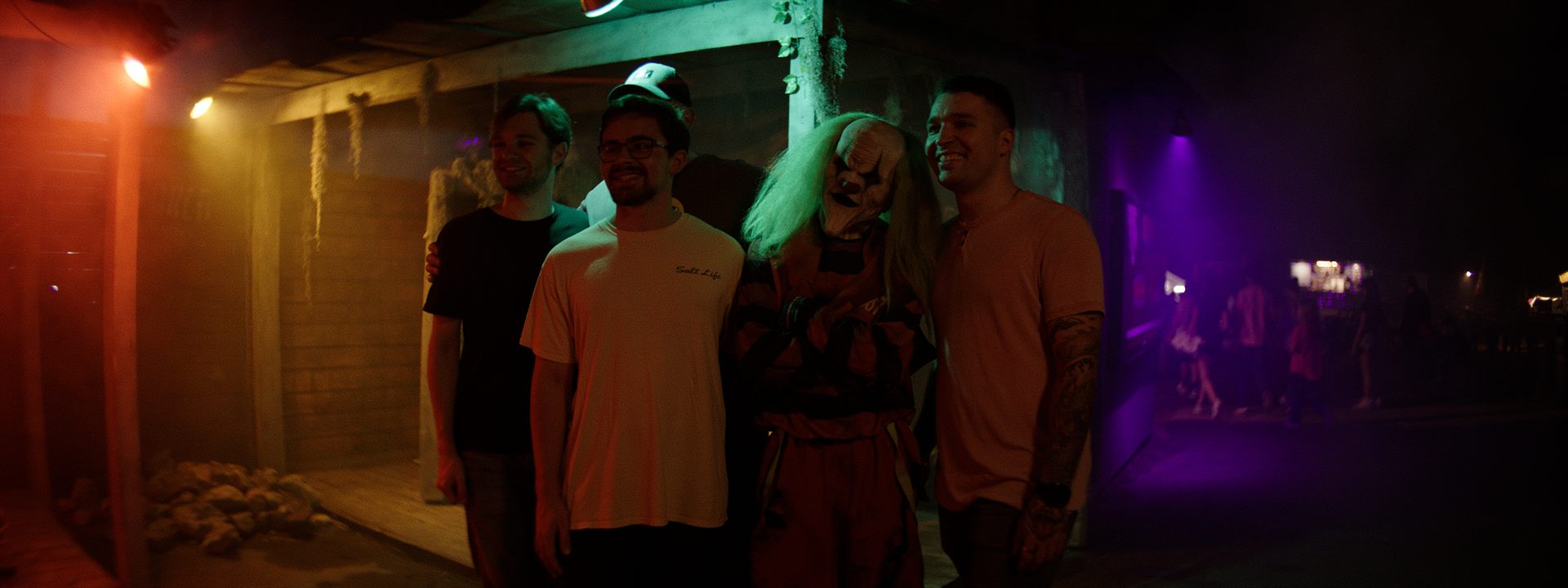
Documentary at this scale means tight crews — often two to four people — cinema cameras with documentary discipline, and a director-led edit. We pre-interview, we pre-block, we pre-light when the subject allows. The result reads like a feature, not a vlog.
We work across the season-long arc: development with the subject, the build-up of trust, the on-camera relationships, the edit that protects what was actually said. The trust matters more than the gear. Subjects let you film what's actually happening when they believe you'll cut it honestly.
Madworld is the documentary in production now — a horror documentary about a 10-year-old haunted-attraction operation in South Carolina. Six October nights on RED V-Raptor with Atlas Orion anamorphic glass, plus pickup days in early 2026. We're tracing the season-long arc: the August build-out, the talent rehearsals, opening weekend, the costume routine, the late-night closing rituals. A film about horror as a craft and performance as labor.
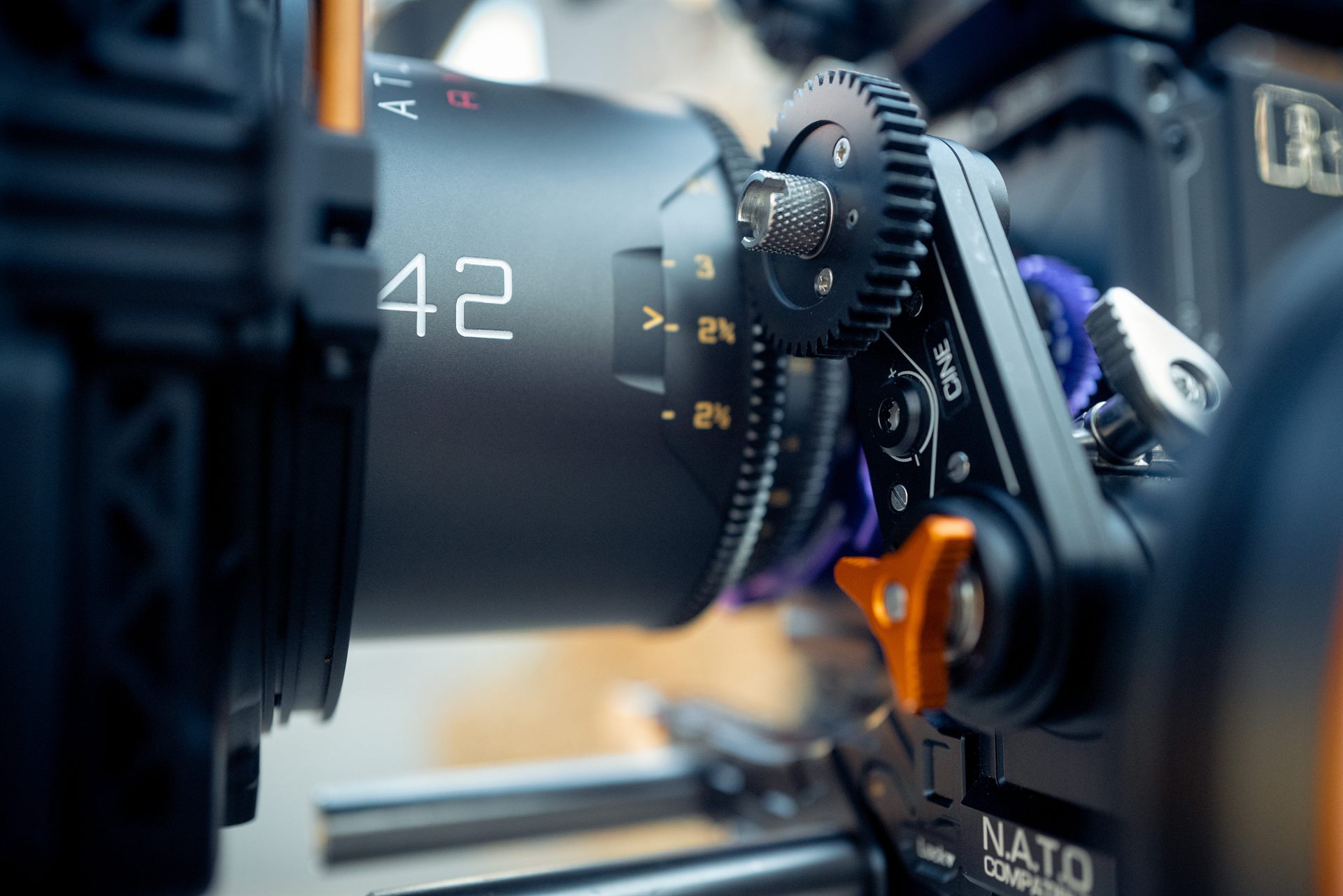
Documentary lighting is a different discipline than narrative. We work in available light when we can, augment with portable LED when we have to, and we're never the loudest team on set — the subject is.
When the subject is performance art (Madworld actors going on for two months), the documentary instinct is to wait for the moment the performer drops the mask. Those moments rarely arrive on the first take.
"Every scream you hear in October was choreographed in August by people you'll never see on camera. We thought that was worth pointing at."
— Director's note, MADWORLD
- 376 Production stills in the Madworld archive
- 6 nights Principal photography (Oct 2025)
- 2–4 people Typical doc crew size
- 8K RED Anamorphic capture
- 01
Subject + access
Conversations with the subject before the camera. Scout the spaces. Build the trust.
- 02
Treatment
What the film is about underneath the plot. Visual references, structure, length.
- 03
Field production
Cinema cameras, broadcast-quality audio, small crew, long days. We follow the story.
- 04
Selects + paper edit
We log everything, paper-edit the spine, then assemble. Cuts are story-first, not coverage-first.
- 05
Color & mix
Documentary deserves the same finish as narrative. Resolve color, scored mix, deliverables to broadcast spec.
- 06
Festivals & impact
We help plan the festival run and any impact campaign — the film is only useful if it gets seen.
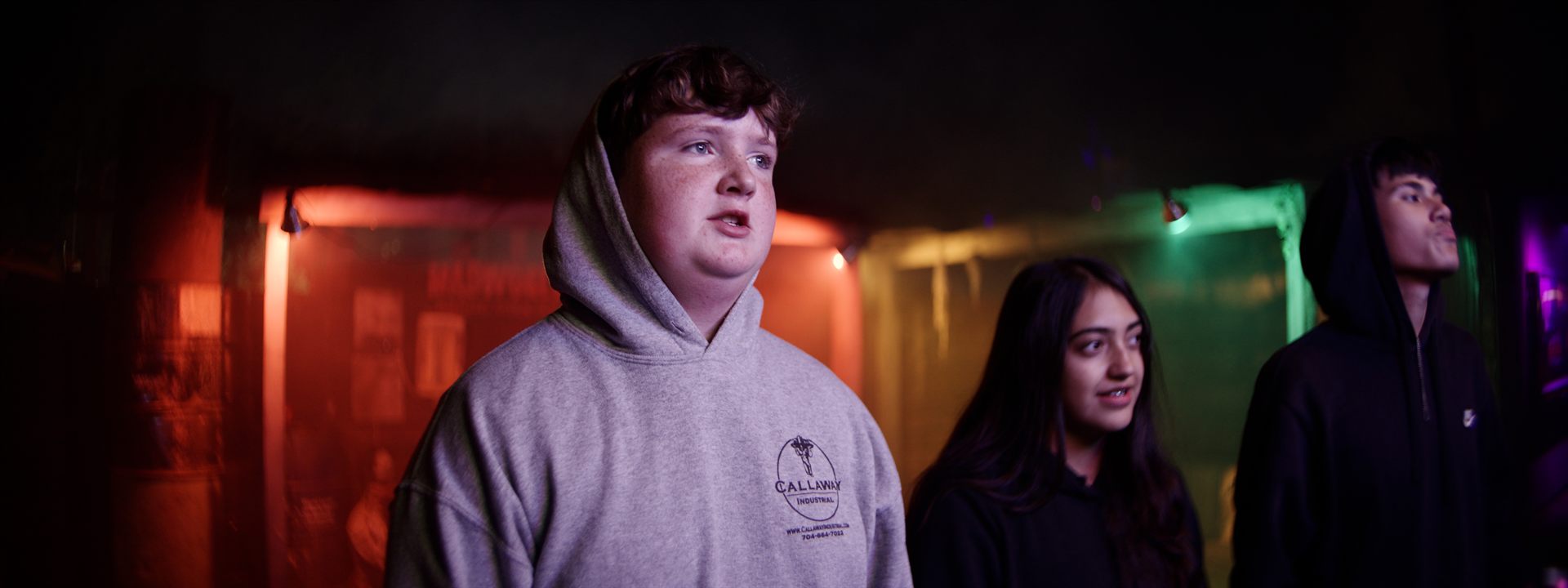
Documentaries get better when the team comes back. We plan our doc productions to span the actual life of the subject — not just the part that fits in a shooting block. That's why Madworld covers a full season, not a single weekend.
If you're a subject who needs the slower film made about you, the conversation starts at the bottom of this page.
- RED V-Raptor 8K capture for the kind of frame you can crop into.
- Sennheiser MKH 416 Boom standard for documentary dialogue.
- Aputure / Litepanels Battery-powered LED for run-and-gun interview lighting.
- DJI Inspire 3 Cine-quality drone, FAA Part 107 licensed.
-
We're drawn to subjects with a season-long or year-long arc — operations, performances, working communities that are doing something specific over time. Madworld is the haunted-attraction operation; Jeter Mountain Farm is the working farm. We're less interested in single-event docs and more interested in films that capture how something is actually made or run.
-
No. We shoot documentary at every length — branded short documentaries for hospitality and industrial clients, festival-track featurettes, and feature-length docs. The length follows the subject, not the brief.
-
Documentary trades control for honesty. On a brand film we light every shot we can; on a documentary we light only what the subject lets us. The camera package, the color science, and the editorial instincts are the same — what changes is the discipline of waiting.
-
Yes — that's actually our favorite kind of doc. The festival version is the long cut; the brand version is the trailer, the recruitment cut, the trade-show piece, the social-edits. We plan for both deliverables from the start so the film does double duty.
-
Branded short documentaries run $30k-$100k depending on shoot days and locations. Festival-track featurettes run $50k-$250k. Features run higher — we scope per project. The number we care about is whether the budget supports a real finish in post, since that's where documentary lives or dies.