Most independent features never see a screen. The ones that do were built by a team small enough to keep showing up.
Feature work is the long form — multiple weeks on set, multiple months in post, every department in service of a single arc. We approach features the way we approach every other film: small crew, big preparation, and a finished cut that looks like it cost twice what it did.
We don't take on more than one feature a year. The ones we do take on, we go deep on.
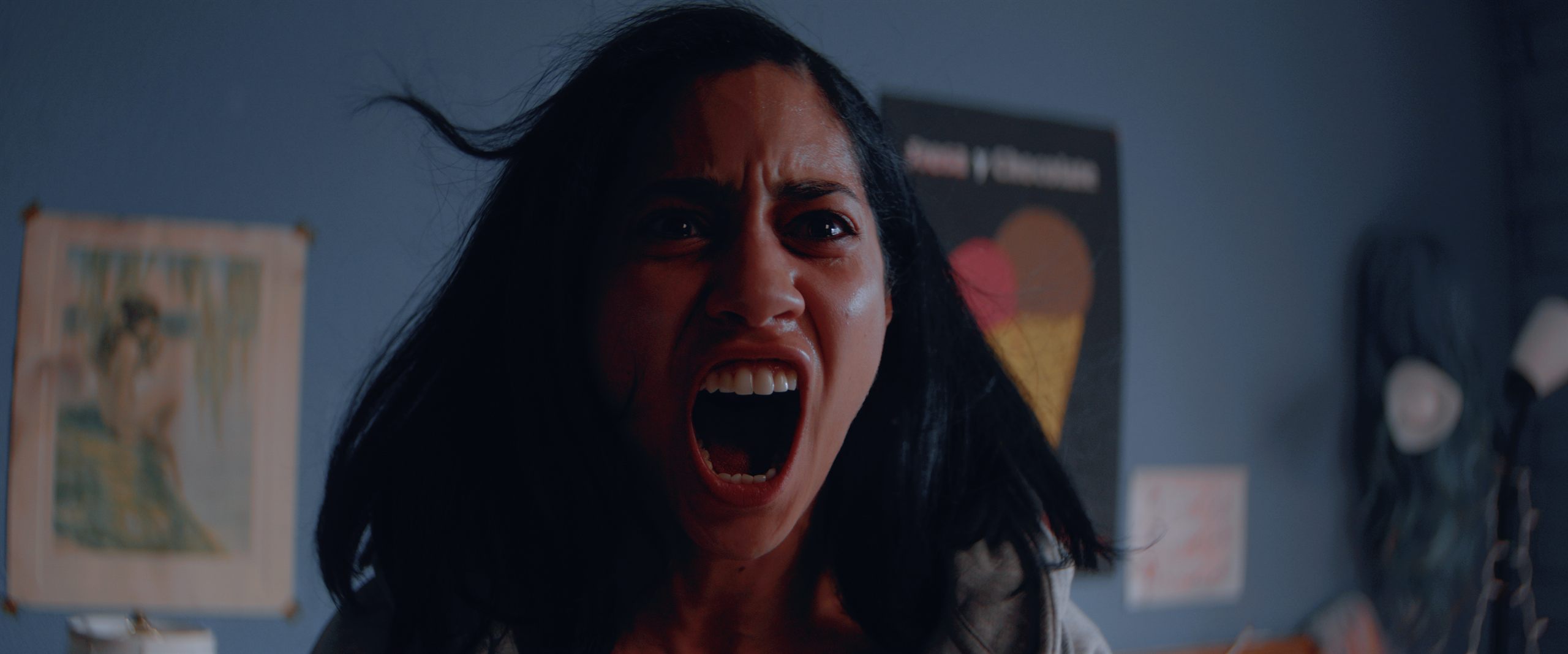
The economics of an indie feature only work if the team is small and over-prepared. Filmit runs a director-DP-editor-producer practice in-house, which means a feature production team can scale from four to forty without losing the people who care about the cut. The crew who shot the trailer is the crew who finishes the film.
We protect the script through every stage: development, production, edit, color, sound. Every department reports back to the cut — not the schedule, not the brand, not the budget. That's how features get finished.
We're realistic about distribution. We help directors think about festivals, sales, and the long tail before the first day on set, so the film has a path to be seen. A feature that wraps without a release plan is a film that lives in the producer's hard drive.

Blue Woman — an indie feature shot in New York, directed by Andrew Hendrix. Andrew and Kyle Sharp walked through the making of it on the Real Talk podcast, which is embedded on the Blue Woman case study page.
The conversation is honest about what a first feature actually demands. We share it because we think the path is more useful than the polish — and because we want the next director thinking about a feature to have a real reference point.
"The crew who shoots day one of the feature is the crew who delivers the final mix. Continuity isn't a luxury on an indie — it's the only way the film finishes."
— Filmit production philosophy
- 1 Feature a year, max
- 12+ months Average development cycle
- 8K RED V-Raptor + ARRI Alexa 35
- In-house Edit · Color · Sound · Deliver
- 01
Development
Treatment, beat-out, lookbook. We work with the writer-director until the script reads like the film.
- 02
Pre-production
Casting, locations, schedule, gear, insurance, deal memos. Every shot designed before the truck is rented.
- 03
Production
On-set, on-time, calm. We pre-light in our heads first; that's why our days run at our pace, not the clock's.
- 04
Editorial
Director's cut first. Producer's cut after. We protect the script through the edit and trim ruthlessly when the script asks.
- 05
Color & sound
In-house color in DaVinci Resolve. Sound design and re-recording mix to spec, scored to picture.
- 06
Festivals & distribution
We help plan submissions, prep the deliverables packet, and stay involved through the festival run and beyond.
We're picky about features because the cost — financial, emotional, calendar — is real. The right one is the one where the director has something specific to say, the script reads like the film, and the producer has the runway to finish post properly.
If that's the project you're trying to make, the conversation starts at the bottom of this page.
- RED V-Raptor Theatrical-grade resolution and dynamic range.
- ARRI Alexa 35 Cinema color science the world's biggest features run on.
- Atlas Orion Anamorphic prime set — 32mm, 40mm, 65mm, 80mm, 100mm.
- DJI Ronin 4D Stabilized handheld for run-and-gun coverage that still cuts.
-
We take features at micro-budget through low-six-figures. Below $50k we look for stories that can be shot in 8-15 days on practical locations with a small ensemble. Above $250k we structure department heads and a longer shoot. We don't pitch on features we can't actually finish well at the budget, so the first conversation is always about whether the script and the dollars line up.
-
New York City and the Carolinas are home — most of our work happens within those two coasts. We've shot in Brooklyn, Manhattan, Charleston, Greenville, Asheville, and Hendersonville. We travel for the right project. We don't travel to make a project feel bigger than it is.
-
We don't write checks but we help structure the financing path. That means budget breakdowns the producers can take to investors, a deliverables plan that lines up with festival and sales expectations, and honest readouts on what each tier of money buys. Sometimes our pre-production work earns the film a finishing grant or a co-producer; sometimes the work convinces an investor the cut is real.
-
12 to 24 months. Development runs 3-6 months, pre-production 1-3, principal 2-6 weeks, post 4-9 months including sound and color. We don't rush post — most indie features die in the edit, not the shoot.
-
We help plan the strategy and prep all the deliverables — DCP, ProRes masters, M&E stems, marketing kit. We work with sales agents and festival programmers; we don't take a piece of the sale. Distribution is the producer's call; our job is to make sure the film has every option available when that call comes.